Who Decides When a Senator Can No Longer Serve?
Mitch McConnell’s prolonged absence exposes how little formal process exists for addressing incapacity in Congress.
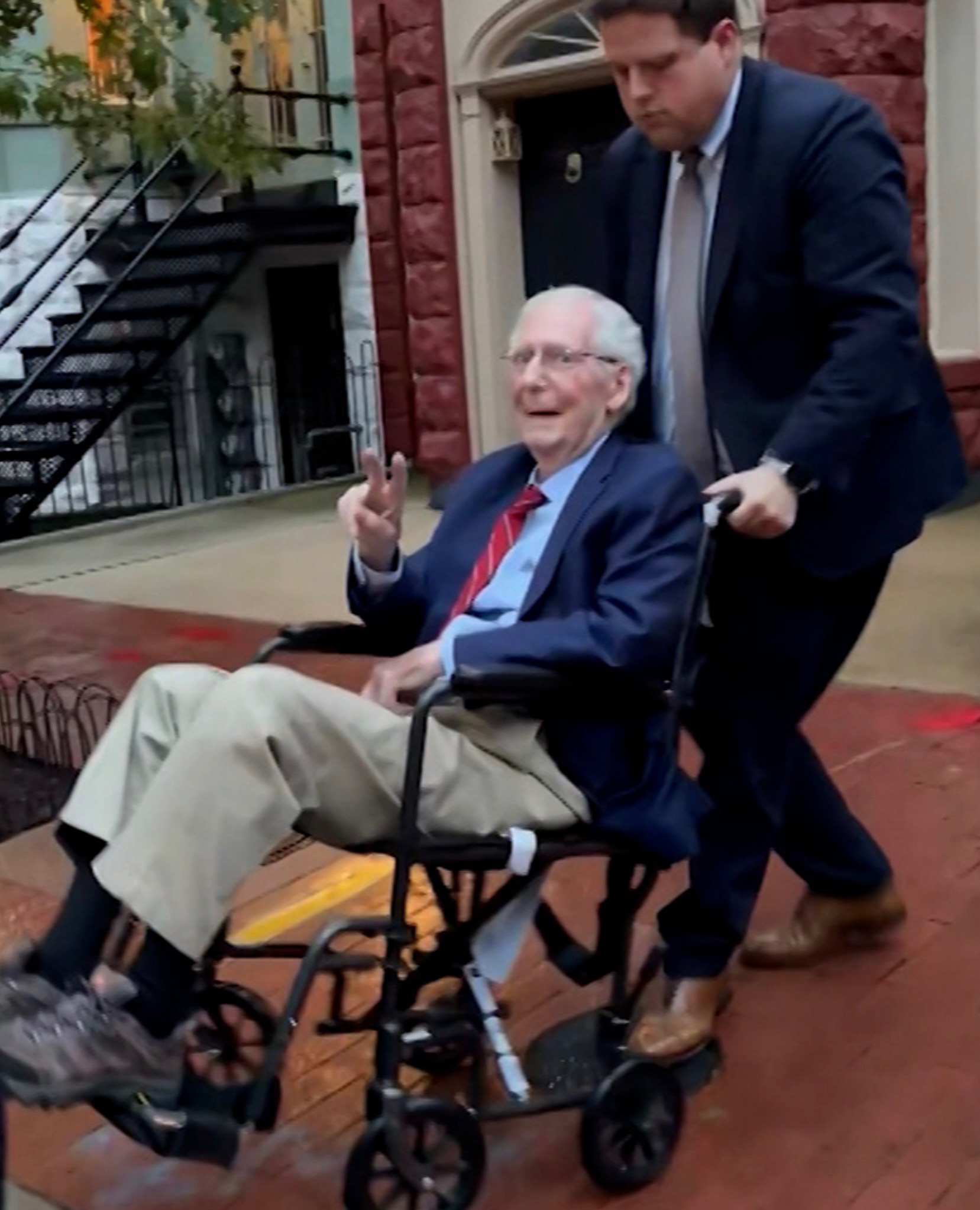
Kentucky Senator Mitch McConnell was absent from the Senate for roughly three months after a June 2026 fall and hospitalization, returning on September 14. During that period, he continued receiving his congressional salary. [1][2]
Senators receive an annual salary established by law. Federal law currently contains no provision for docking senators’ pay for days missed. Congress once had such a rule for both chambers, dating to the 19th century, but even that rule exempted absences caused by illness. In 2005, Congress amended the statute to remove the Senate entirely; the House remains covered today, with the illness exception intact. [2]
What would happen if an ordinary American missed three months of work? What sort of income protection and coverage is available?
As of March 2026, 81% of private-industry workers had access to paid sick leave, but only 49% had access to employer-provided paid family and medical leave. [3]
The Family and Medical Leave Act provides eligible workers of covered employers with up to 12 weeks of unpaid, job-protected leave for childbirth or adoption, foster-care placement, caring for a spouse, child, or parent with a serious health condition, or the employee’s own serious health condition. [4]
McConnell’s own record includes repeated opposition to expanding paid and unpaid medical leave. Popular Information counted at least 23 votes against creating or expanding paid and unpaid medical-leave protections during McConnell’s Senate career. He voted against the final passage of the Family and Medical Leave Act in 1993, despite supporting an earlier FMLA measure in 1990. [5][6]
McConnell missed 60 recorded Senate votes during his absence; his last recorded vote before his hospitalization was June 11. At the same time, reporting indicated that he continued communicating with staff and colleagues and working on Senate and Kentucky matters remotely. [7]
Two days after McConnell returned from his roughly 12-week absence, the Senate Agriculture Committee was voting to advance the Agricultural Act of 2026. During the roll call, McConnell initially indicated an “aye” vote that the clerk did not appear to register. Senator John Hoeven, seated beside him, then leaned toward McConnell and appeared to say “no,” while Chairman John Boozman also spoke toward him and appeared to indicate “aye.” McConnell then repeated his “aye” audibly, and the legislation advanced. Hoeven’s office later said that Hoeven, not McConnell, had been confused about which question was before the committee. [8]
That explanation complicates what the exchange appeared to show, but the episode nevertheless illustrates a broader problem: in the absence of any formal standard for assessing a senator’s capacity, ambiguous public moments can leave voters trying to draw conclusions from brief and incomplete observations. [9]
The question is not simply whether an 84-year-old senator should be allowed time to recover from an injury. Of course he should. The tougher question is what standards, if any, exist to determine whether elected officials remain capable of carrying out decisions with national consequences. [1][9]
This is not a partisan issue. There has been significant public concern about the age and cognitive ability of both President Trump and former President Joe Biden. In a 2024 AP-NORC poll of 1,102 adults, 63% expressed low confidence in Biden’s mental capability to serve effectively as president, compared with 57% who said the same of Trump. [10]
President Trump took the Montreal Cognitive Assessment (MoCA). The MoCA is a screening tool designed to detect mild cognitive impairment and early signs of dementia. President Trump scored 30 out of 30, which was within normal limits. Cognitive screening by itself does not diagnose dementia or establish occupational ability. [11][12]
The president is covered by the 25th Amendment’s inability provisions. Senators are different: the Senate can expel members by a two-thirds vote and can compel attendance, but there is currently no medical-incapacity process that removes or replaces an incapacitated senator. [9][13]
The 17th Amendment provides a mechanism for filling an actual Senate vacancy, but medical incapacity by itself does not create a vacancy. In 2024, Kentucky repealed its governor’s authority to appoint a temporary U.S. senator. [9][14]
The issue is not simply that America’s political leaders are old. Age alone does not define competence. The issue is that some of the most consequential jobs in the country have remarkably few mechanisms for determining when an elected official can no longer perform their duties. [9]
H.R. 9769, the Duty of Transparency Act was introduced July 16, 2026. It would require members of Congress expecting to be absent from proceedings for at least 21 consecutive days to publicly disclose the expected duration and reason for the absence, whether they can continue performing official duties remotely, and a staff contact. Updates would generally be required every 30 days. The proposal explicitly does not require disclosure of a diagnosis, prognosis, treatment, or other protected medical information. As of October 1, it has only been introduced and referred to the House Administration Committee. [15]
Voters should not have to speculate on the health of government officials through a few seconds of video footage. Elected officials deserve time and privacy to handle serious health concerns. What institutional process can respect both?
Sources [1] Reuters, “A frail-looking McConnell returns to the US Senate after three-month absence,” Sept. 14, 2026. [2] U.S. Constitution, Article I, Sections 5–6; U.S. Code, 2 U.S.C. § 5306, “Deductions for absence,” including the statutory history showing its 1856 origin and the 2005 amendment removing references to the Senate while retaining the illness exception for House members. [3] U.S. Bureau of Labor Statistics, “Employee Benefits in the United States,” March 2026, reporting access to paid sick leave and paid family and medical leave among private-industry workers. [4] U.S. Department of Labor, “Family and Medical Leave (FMLA),” describing up to 12 weeks of unpaid, job-protected leave for eligible employees of covered employers. [5] Popular Information, “McConnell, out sick for two months, voted against medical leave 23 times since 1985,” Aug. 2026, documenting McConnell’s medical-leave voting record and his support for an earlier FMLA measure in 1990. [6] U.S. Senate, Roll Call Vote No. 11, 103rd Congress, 1st Session, Feb. 4, 1993, showing McConnell voting “Nay” on final passage of H.R. 1, the Family and Medical Leave Act of 1993. [7] WLKY, “Mitch McConnell hasn't voted in months — here's are some of the Senate votes he's missed,” Sept. 14, 2026; and WLKY reporting during McConnell’s hospitalization quoting his office as saying he remained engaged with staff on Senate business and Kentucky matters. [8] KFGO, “Sen. Hoeven’s office explains why he was talking during Sen. McConnell’s Farm Bill vote,” Sept. 17, 2026, describing the exchange among McConnell, Hoeven and Boozman and quoting Hoeven’s office’s explanation. [9] Congressional Research Service, “Incapacity of a Member of Congress,” Jan. 18, 2011, explaining that no specific constitutional, statutory, or congressional-rule procedure exists for declaring a sitting member’s seat vacant because of incapacity. [10] Associated Press, “6 in 10 US adults doubt mental capability of Biden and Trump, AP-NORC poll finds,” March 4, 2024. [11] Physician to the President, “Memorandum From the Physician to the President,” May 29, 2026, reporting President Trump’s Montreal Cognitive Assessment score of 30 out of 30 and describing it as within normal limits. [12] Ziad S. Nasreddine et al., “The Montreal Cognitive Assessment, MoCA: a brief screening tool for mild cognitive impairment,” Journal of the American Geriatrics Society, 2005; MedlinePlus, “Cognitive Testing,” explaining that cognitive screening tests alone cannot diagnose dementia or another cause of cognitive impairment. [13] Constitution Annotated, Twenty-Fifth Amendment, Sections 3–4, establishing procedures concerning presidential inability; U.S. Senate, Article I, Section 5, providing for compulsory attendance and expulsion with the concurrence of two-thirds. [14] Constitution Annotated, Seventeenth Amendment, governing Senate vacancies; Kentucky General Assembly, H.B. 622, enacted in 2024, repealing the Kentucky governor’s authority to fill a U.S. Senate vacancy by appointment. [15] U.S. Government Publishing Office, H.R. 9769, “Duty of Transparency Act,” introduced July 16, 2026, including its 21-day disclosure requirement, 30-day updates, medical-privacy protections, and referral to the House Administration Committee.